The first box on Margaret Eldridge's bluebird trail sits on a cedar post at the edge of her front lawn, six metres from the curb, facing southeast across a quiet cul-de-sac in west Cary, North Carolina. It has fledged eastern bluebirds in every year but two since 2007.
The two off years were 2014, when a house wren claimed the box in early May and laid sticks across the existing bluebird clutch, and 2020, when a series of late freezes killed three nestlings at the second brood stage.
The other seventeen seasons produced, by Eldridge's careful records, two hundred and ninety-one fledged bluebirds from a five-box trail that runs across four contiguous yards. She maintains the data in a spiral notebook and submits a summary each November to the Cornell Lab's NestWatch project.
Eldridge is sixty-three. She works part-time as a bookkeeper for a small landscape company and has lived in the same brick ranch house since 1991. The bluebird boxes began, she says, because a neighbour died in 2006 and his widow asked Eldridge to take down a single rotting box from his back fence. Eldridge took it down, then built a better one, then built four more.
The trail now spans the back yards of four houses, all of which are owned by people who agreed, at some point between 2007 and 2014, to let Eldridge mount a box on their property and monitor it weekly through the nesting season.
This is a small thing. It is also one of the cleaner local examples of what the suburban yard can still do for a once-declining cavity-nester. Eastern bluebird populations across the southeastern United States have recovered substantially since the 1970s, driven almost entirely by volunteer nest-box programs.
The recovery is real and is one of the unambiguous wins of late-twentieth-century North American conservation. The species was in serious trouble in the 1960s, squeezed by introduced house sparrows and starlings competing for natural cavities and by the loss of orchard and pastureland.
What turned the trend was thousands of people like Eldridge, building boxes to a standard plan first formalized by the North American Bluebird Society in 1978 and monitoring them on a weekly schedule from March through August.
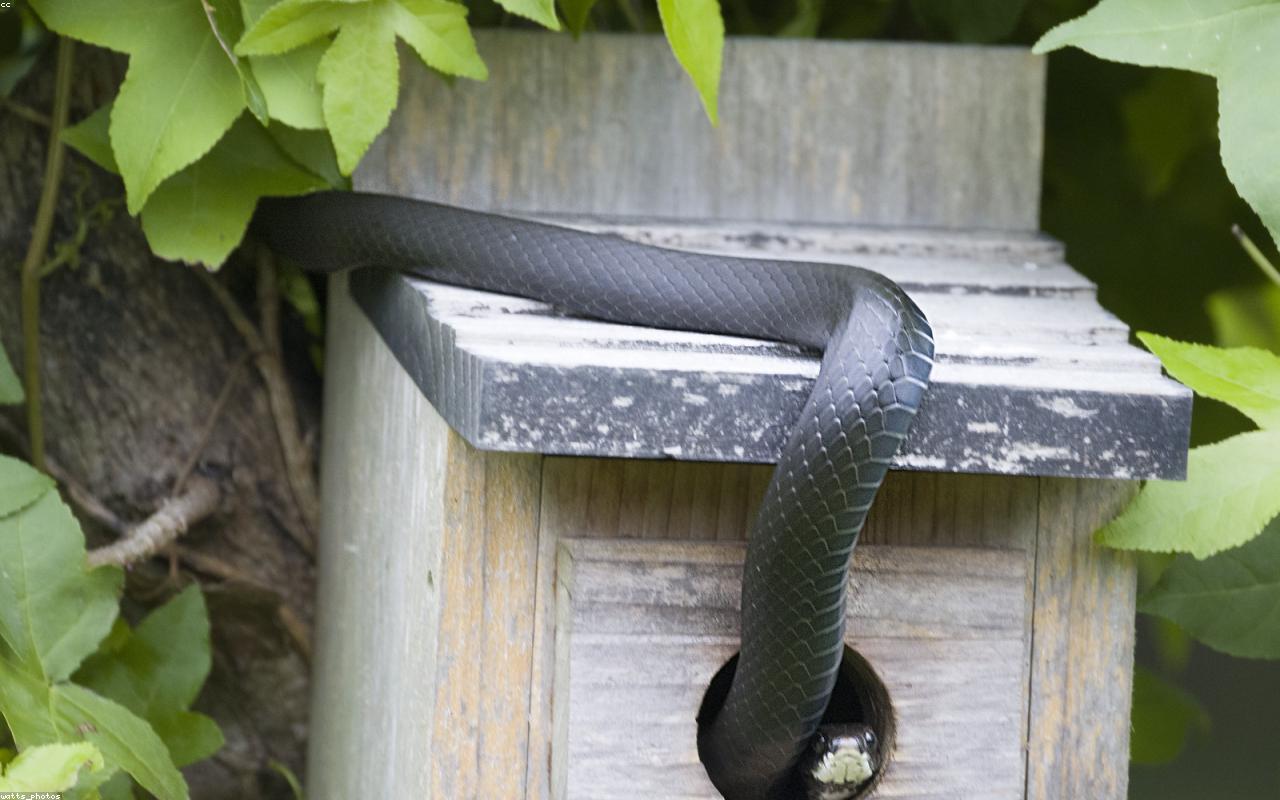
The plan is unfussy. A pine or cedar box about twenty-eight centimetres tall, a single entrance hole thirty-eight millimetres in diameter, no perch, a sloped roof, a side door for monitoring access, drainage holes at the bottom corners. The cost in materials, in 2026 dollars, is about eleven dollars per box.
Eldridge builds her own. She uses rough-cut cedar from a small mill in Chatham County and pounds the boxes together on a workbench in her garage in February of each year. She replaces about one box per year as the wood weathers.
The trail itself follows a logic that is half ornithology and half neighbourhood geometry. Boxes face east or southeast to catch morning sun and avoid afternoon heat. They sit on metal poles with predator baffles, not on trees or fences. They are spaced at least thirty metres apart, because bluebirds are territorial and two pairs will not nest closer.
The five-box spacing across four yards works out to a roughly one-acre territory per pair. In good years, all five boxes fledge two broods. In average years, three or four boxes produce two broods and the rest produce one.
Eldridge's records show a long-term mean of seventeen fledged bluebirds per year across the trail, with a high of twenty-three in 2018 and a low of nine in 2014. The mean has been remarkably stable across nearly two decades, suggesting that her micro-habitat is at functional carrying capacity.
This is what a working suburban bluebird program looks like at the parcel scale. It is not a recovery effort. The species is no longer in trouble. It is a small, steady local production of a charismatic native cavity-nester that would not otherwise be there.
What makes the Eldridge trail unusual is the duration. NestWatch data show that the median bluebird-box monitor maintains a trail for three to five years before retiring or moving. Nineteen years is at the long tail of the distribution, and most long-running trails are kept on land the monitor owns outright.
Eldridge's program depends on neighbour cooperation across four properties. Two of the original neighbours have moved away since 2007. In each case, the new owners agreed to let the boxes stay. She knocks on the door each spring to ask.
Pell Murphy visited the trail on May 4, 2026. Box one held a brood of three, day eight, eyes open, pin feathers showing. Box three held a clutch of four blue eggs. Box four held a Carolina chickadee nest, which Eldridge counts as a partial success because the chickadee is also native and cavity-limited.
The trail is not a saviour for the suburban bird community. The houses on the cul-de-sac mostly maintain conventional lawns, and the bird life beyond the bluebirds is thin: a few mockingbirds, the chickadees, a pair of cardinals, the occasional brown thrasher in the hedge by Eldridge's drive.
What it is, instead, is a working argument that a single resident, with a free Saturday in February and a willingness to knock on doors, can build a small productive program out of one cul-de-sac and keep it running for nineteen years. The trail's two hundred and ninety-one fledged bluebirds are the evidence.
Eldridge says she will keep the trail going as long as she can climb a stepladder. She has trained her granddaughter, who is fourteen and lives two miles away, to monitor the boxes in her absence. The granddaughter, so far, is patient with the work.