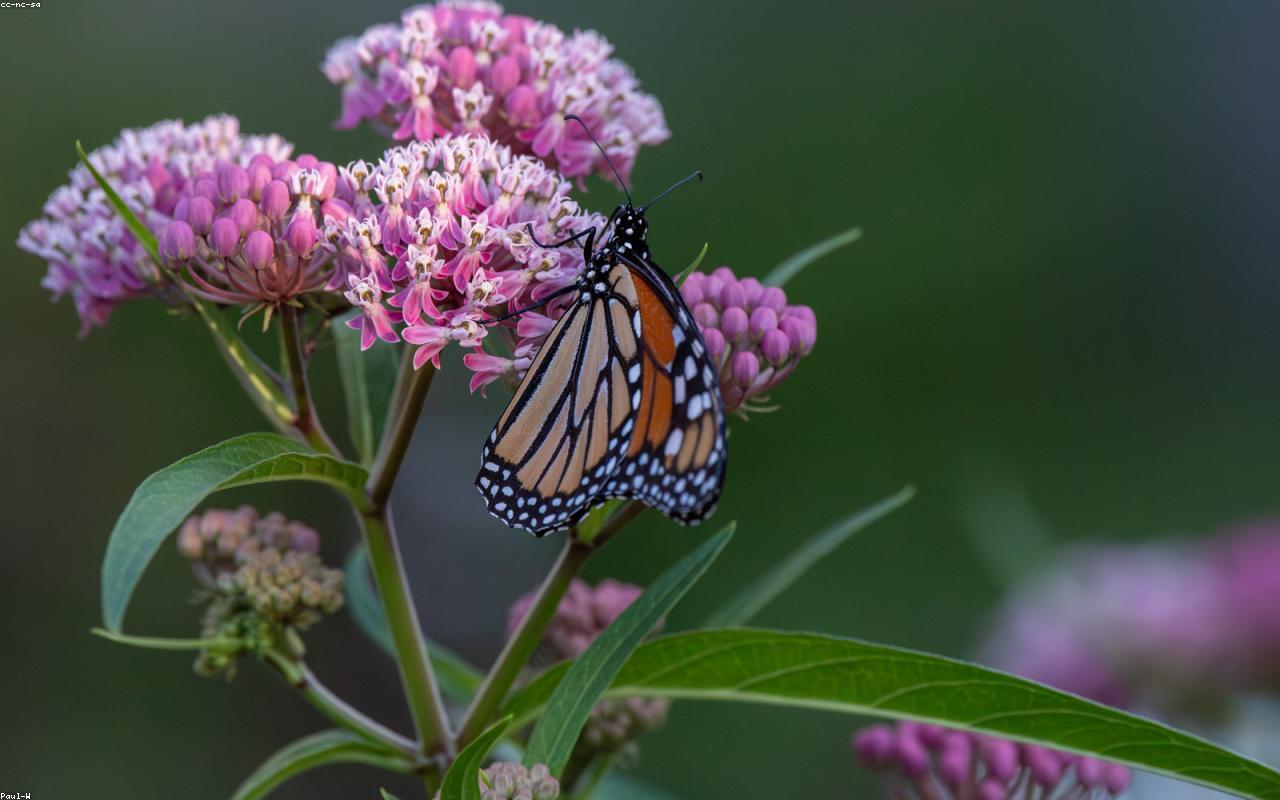
Each October, in a high-altitude oyamel fir forest in the Sierra Madre of central Mexico, the trees turn orange. The colour is not foliage. It is several hundred million monarch butterflies, three or four deep on every branch, hanging in clusters dense enough to break the lower limbs.
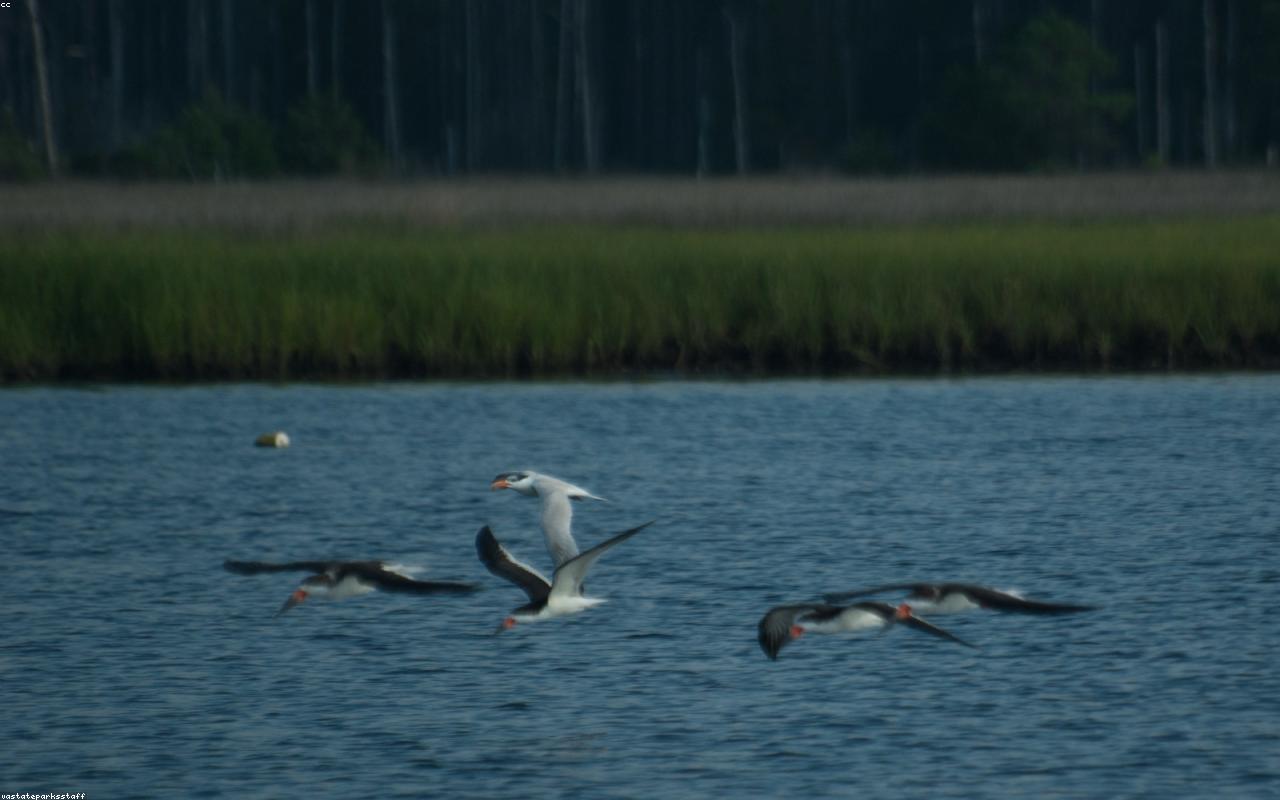
Each October, in the same general weeks, several billion songbirds pass through the same general airspace, mostly at night, mostly without anyone seeing them. The blackpoll warbler, a 12-gram bird from the boreal forest, flies non-stop over open Atlantic from Nova Scotia to Venezuela, a journey of around eighty hours.
These two migrations are almost never discussed together. The monarch is a butterfly, charismatic and slow, and gets the science writing. The blackpoll is a small grey-green warbler that birders count by ear and that the general public has, for the most part, never heard of.
But the comparisons are useful. Both species cover thousands of kilometres each year. Both navigate using mechanisms that researchers have only partially decoded. Both depend on a chain of specific habitats whose loss at any link can collapse the system. And both have shown sharp population declines that have generated, in the last decade, an unusual amount of cross-disciplinary research.
Marius Doyle, who edits Roost's Species section, spent the winter of 2024 in central Mexico observing the monarch overwintering sites at El Rosario and Sierra Chincua. He went, he says, to think about migration in a slower frame than birds usually allow.
The monarch's annual cycle takes four generations to complete. A butterfly that overwinters in Mexico flies north in March, lays eggs on milkweed in Texas, and dies. Its offspring continue north, lay eggs in Oklahoma or Kansas, and die. By summer's end, a butterfly in southern Ontario is four generations removed from any individual that ever saw the Mexican forest.
Yet that fourth-generation butterfly, hatched in late August, will fly back to a grove its great-great-grandparent left in March, often returning to within a few hundred metres of the original cluster. No one knows precisely how it finds the place.
Birds, by contrast, complete their migrations as individuals. A blackpoll that left a Newfoundland spruce wood in September is the same bird that arrives in a Venezuelan rainforest in October. Its navigation is informed by experience, particularly after the first year, but the first migration must be made on instinct alone.
What both groups appear to share is a navigational toolkit drawn from multiple cues. Monarchs use a time-compensated sun compass, calibrated by a circadian clock in the antennae. Blackpolls use the geomagnetic field, the position of celestial bodies, and, on cloudy nights, what appears to be a sensitivity to polarized light at the horizon.
Henrik Mouritsen, a sensory biologist at the University of Oldenburg, has spent thirty years studying songbird magnetoreception. His work suggests that European robins, and likely many other species, perceive the magnetic field as a visual pattern overlaid on the sky, through a quantum-mechanical process involving cryptochrome proteins in the retina.
Whether monarchs have any analogous magnetic sense is contested. A 2014 study by Patrick Guerra and Steven Reppert at the University of Massachusetts Medical School argued that monarchs do use a magnetic compass, at least as a backup when sun cues are unavailable. Replication has been partial.
What is uncontested is that both species use stopover habitats. The blackpoll fattens on insects in coastal scrub from New England down to the Maritimes before its Atlantic crossing. The monarch nectars on goldenrod, asters, and late-blooming wildflowers along its southbound route, requiring an unbroken corridor of flowering plants from Canada to Mexico.
Lose the corridor and you lose the migration. This is the warning that has come, with increasing volume, from both monarch and songbird researchers since the early 2010s.
The eastern monarch population, measured by area occupied at the Mexican overwintering sites, has declined by roughly eighty percent since the mid-1990s. The decline is attributed primarily to the loss of milkweed in the agricultural Midwest, driven by herbicide-tolerant crops and changing land use.
The blackpoll has declined by perhaps eighty-eight percent over the same period, according to the 2022 State of the Birds report. The drivers are less well understood but appear to include boreal forest loss, the conversion of Caribbean and South American wintering habitat, and possibly direct mortality during the over-water crossing.
Both numbers come with substantial uncertainty bands. Both have generated calls for hemispheric, coordinated conservation that crosses national borders. Neither species can be saved by any one country acting alone.
What strikes Doyle, after his winter in Mexico, is that the monarch tells a story that birds have been telling for much longer, in language that the public finds harder to read. Butterflies are visible. They cluster in places people can visit. The blackpoll is a small grey bird in the canopy at dawn, identifiable mostly by a high, thin trill.
The work of migration biology over the next decade may be, in part, the work of translating between these two languages. The threats are not identical, but the underlying problem, the fragmentation of continental-scale habitats, is the same.
On a cold morning at El Rosario in late January, Doyle counted twenty-three minutes between the first ray of sun on the upper colony and the first cluster lifting into flight. The temperature was 6 degrees Celsius. By 11 a.m., the air above the firs was full of orange wings.
He thought of the blackpolls, then, somewhere over the Lesser Antilles, invisible at 4,000 metres. Two solutions to the same problem, evolved independently. Two systems built over millennia. Two declines, running on the same clock.