The drive from Houston to High Island, on the upper Texas coast, takes about ninety minutes. The road runs east through low pastureland, crosses the Trinity River, and enters a landscape that is mostly salt marsh, mostly horizon. There is a single elevation worth noting along the way, a salt dome about thirty-eight feet high, surrounded by a grove of live oaks. That is High Island.
In late April and the first two weeks of May, the live oaks of High Island become, for a few hours at a time, one of the densest concentrations of land birds anywhere on Earth.
The reason is geography. Hundreds of millions of neotropical migrants cross the Gulf of Mexico each spring, leaving the Yucatán Peninsula at dusk and arriving on the Texas-Louisiana coast eighteen or so hours later, after a non-stop flight of around 1,000 kilometres. Most years, the birds make landfall well inland, having ridden a tailwind across the water. The coastal trees see them only briefly.
In a bad year, the wind reverses. A northerly cold front meets the migrants over open water. The birds fight headwinds for hours, burn through their fat reserves, and arrive at the coast exhausted, dropping into the first vegetation they see. This is what birders call a fallout.
Inara Khan, Roost's Habitat editor, visited High Island during the first week of May 2026 to observe stopover ecology in action. She had been before, several times, but had not previously stayed for the full window.
On her first morning, a Tuesday, the trees were nearly empty. A handful of Tennessee warblers worked the upper canopy. A male hooded warbler called from the understory. Otherwise, the wind was from the south, the migrants were sailing over, and the High Island oaks were just trees.
On Wednesday afternoon, the wind shifted. A weak front pushed down through Oklahoma overnight, reaching the Texas coast around 4 a.m. on Thursday. By midmorning Thursday, the trees were full.
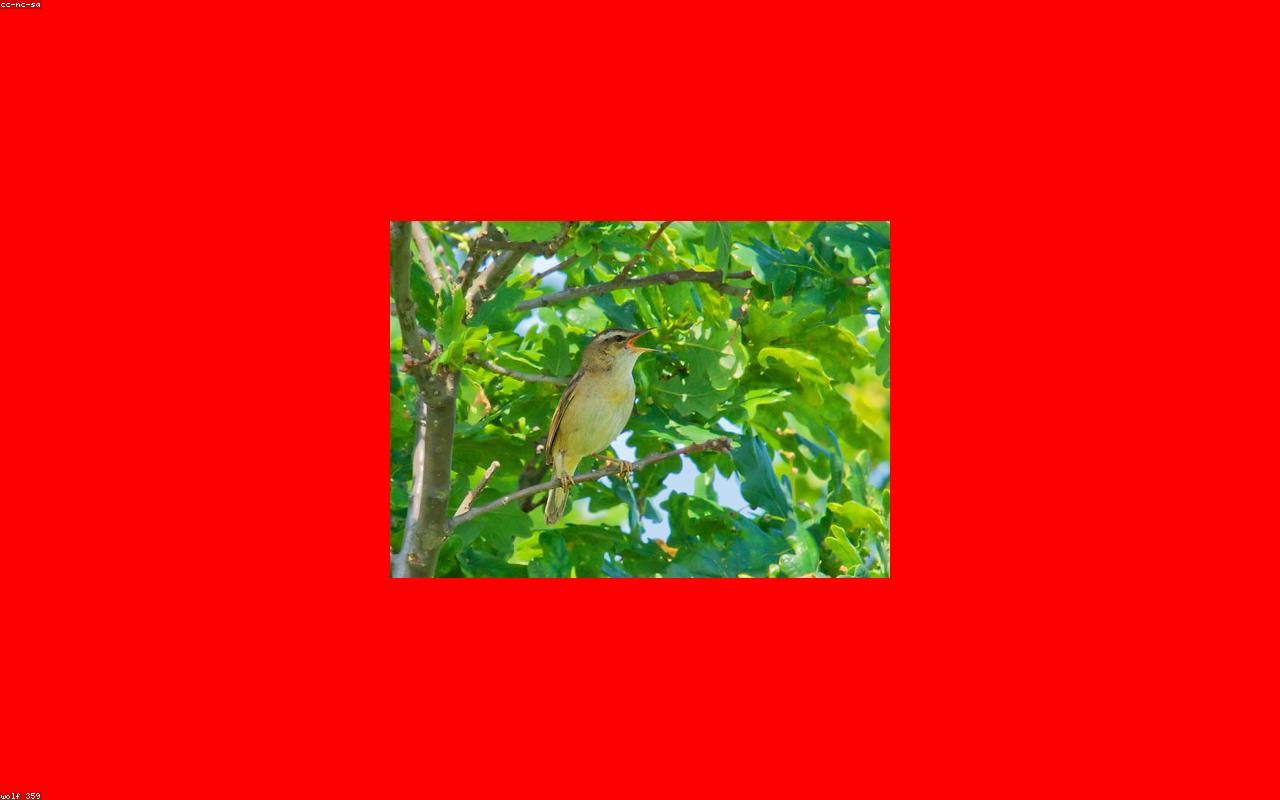
Khan counted, in a single 200-metre walk along Smith Oaks Sanctuary, thirty-two warbler species. Magnolia, black-throated green, chestnut-sided, blackburnian, bay-breasted, Cape May, Wilson's, Canada. A male cerulean warbler, a species in steep decline across much of its range, dropped to within six feet of the path to drink from a puddle.
There were thrushes on the ground, mostly Swainson's and gray-cheeked, kicking through leaf litter with the particular sideways flick that distinguishes Catharus. Vireos worked the mid-storey. Rose-breasted grosbeaks sat motionless on lower branches, conserving energy.
All of these birds had crossed the Gulf the previous night. All of them were, by any measure, in poor condition. Their weights, if any had been captured for banding, would have been at the low end of seasonal norms.
What they needed, immediately, was insect biomass. A migrant warbler arriving at the Texas coast must, in the first twenty-four hours, replenish enough fat to continue inland. The food source on which this depends is mostly caterpillars, and the caterpillars depend on the spring leaf-out of the oaks themselves.
When the oaks leaf out late, or when a freeze kills the early growth, the caterpillar crop is poor and the migrants struggle. When the timing works, a bird can feed almost continuously through daylight hours and continue its journey within a day or two.
This dependency is what makes stopover habitat conservation so consequential. A neotropical migrant that arrives at the Texas coast in good condition can press on to breeding grounds in the boreal forest. One that does not, may not.
The Houston Audubon Society has owned and managed Smith Oaks Sanctuary, along with several other High Island properties, since the 1990s. The acreage is small, perhaps 180 acres in total across the protected sites. The contribution to continental migration is disproportionate.
What the sanctuaries cannot control is what surrounds them. The Bolivar Peninsula, to the east, has seen substantial residential development over the last two decades. The native coastal scrub, which once provided continuous habitat for early-arriving migrants, has been replaced in many places by lawn and ornamental palm.
Khan walked a stretch of road near Rollover Pass on Saturday morning. She found two warblers in an hour, both Tennessees, both in a single small live oak in a vacant lot. The houses on either side held no birds. The lawns held no birds. The remnant patch held the entire local migration.
The lesson, repeated across coastal stopover sites from Texas through Florida, is that the migrants have very little flexibility. They use what is there. When the trees are reduced to scattered remnants in a sea of lawn, the birds concentrate in the remnants. When the remnants are paved over, the birds have nowhere to go.
On her last morning, Khan walked Boy Scout Woods just after sunrise. The wind had turned south again. The trees were quiet. A single magnolia warbler sang from the canopy. A pair of Baltimore orioles fed in a flowering coral bean.
The fallout was over. The birds that had arrived on Thursday had refuelled and continued inland on Friday night. Some of them were already in Arkansas. Some, the most efficient, were perhaps already in Missouri.
What remained at High Island was the trees, the path, the salt dome, the relative quiet. The whole apparatus would wait through summer and autumn and winter for the next April, when it would briefly become, for a few days or a few weeks, the most important woodland in North America.