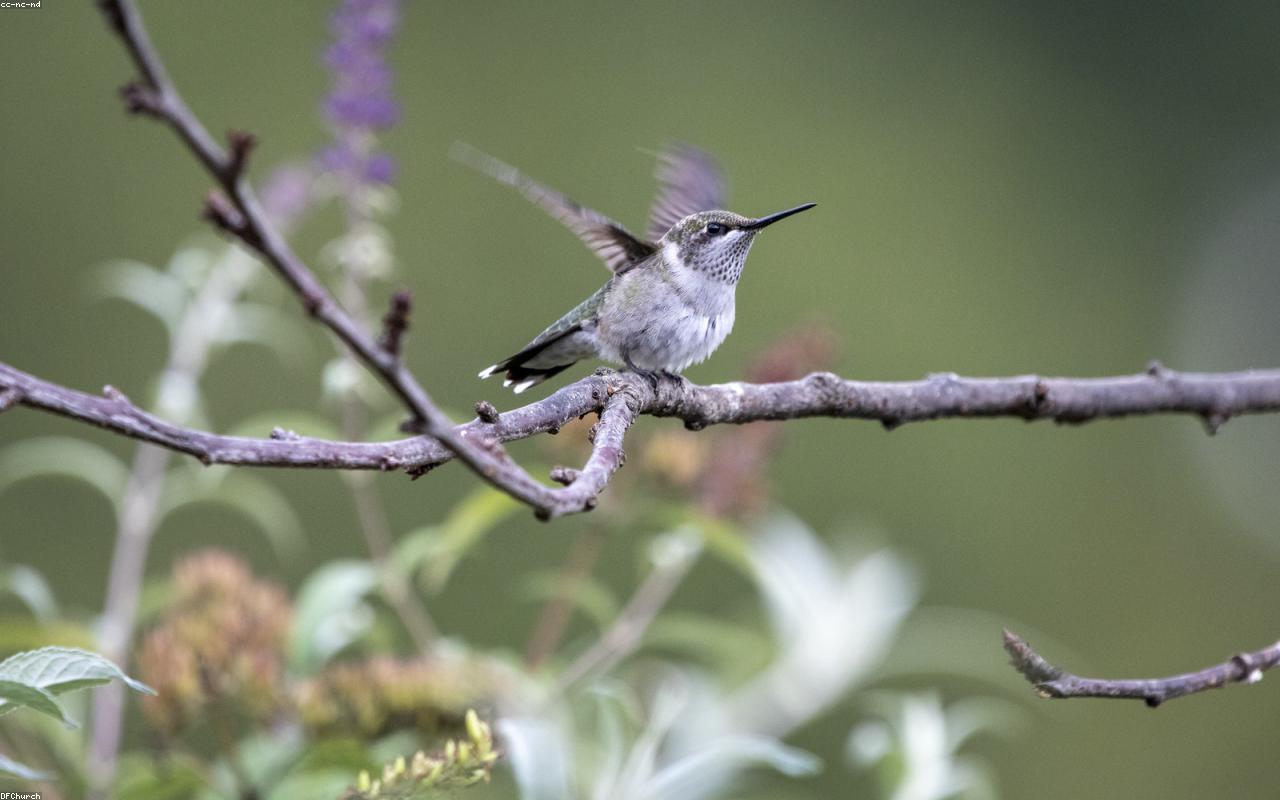
Margaret Voss has kept hummingbird records for her quarter-acre yard in Northampton, Massachusetts since 1994. The records consist of a single ruled notebook per year, kept on a kitchen sill, in which she enters the date of first arrival, the date of nest discovery if applicable, the date of fledging, and the date of last sighting in autumn.
Thirty-one notebooks now sit on a shelf in her dining room. Across that span, the median date of first arrival for ruby-throated hummingbirds in her yard has shifted from May 4 in the 1990s to April 27 in the 2020s. The median date of last sighting in autumn has shifted in the other direction, from September 21 to October 6.
The lengthening of the hummingbird year by roughly two weeks at each end is not a Voss invention. It tracks regional records published by the Massachusetts Breeding Bird Atlas and parallel datasets from Cornell's eBird program. What Voss's notebooks add is the granular phenology of a single yard, which is where the year actually happens for most observers.
April. The first male ruby-throated typically appears at Voss's house in the last week of April, two to four days after the willow buds along the Mill River turn yellow. Males precede females by seven to twelve days, claiming territories and defending nectar sources before the breeding females arrive.
The early-April feeder is a question with two defensible answers. Voss hangs hers on April 15, two weeks before her earliest expected arrival, because she has occasionally hosted an exhausted northbound male in mid-April during warm springs and because the cost of sugar water is trivial. Other observers wait until they have a confirmed local sighting to avoid attracting unseasonable hummingbird visits to a hard frost.
The first feeder of the year is a 1:4 solution of plain white sugar to water, boiled briefly, cooled, and refilled every two days. No food colouring. No commercial mix. No honey. The protocol has been the same since the 1970s and the deviations are all worse than the standard.
May. The females arrive in the first week of May. The males chase them for several days, perform their pendulum display flights — a U-shaped arc of perhaps thirty feet, executed in the female's direct line of sight — and then both sexes scatter to begin the breeding cycle.
Voss has located three active nests in her yard across thirty-one years. All three were in the lower branches of a single black cherry tree, between eight and fifteen feet above ground, on a horizontal branch facing east. The nest itself is a thimble of plant down, spiderweb, and lichen flakes, approximately the diameter of a quarter at the rim, lined with the softest material the female can find.
Egg-laying typically occurs in the second or third week of May. The clutch is invariably two eggs, each the size of a navy bean. Incubation lasts twelve to fourteen days. The female does all of it. The male, having mated, plays no further role in the nest.
June. The nestlings hatch in late May or early June. They are blind, naked, and approximately the size and shape of small soft pellets. The female feeds them regurgitated nectar and small insects — gnats, fruit flies, aphids — captured on rapid foraging flights of two to four minutes apiece.
The June yard is at peak insect production, which matters more than most feeder-watchers realize. Adult ruby-throated hummingbirds eat sugar for energy and insects for protein, and the ratio shifts heavily toward insects during nestling-rearing. The pesticide-free yard with a clover lawn, a few flowering shrubs, and a damp corner is a far better hummingbird habitat than the pesticide-treated yard with ten nectar feeders.
July. Fledging occurs in late June or early July, eighteen to twenty-two days after hatching. The two juveniles, indistinguishable from the adult female except by a faint streaking on the throat and a slightly shorter tail, spend a week or two near the nest before dispersing.
By mid-July, Voss's yard typically holds five to nine individual hummingbirds at any given time — two or three breeding pairs and their fledged young. The feeder traffic increases sharply. She moves from one feeder to three, all on separate posts at least fifteen feet apart, to reduce the territorial disputes that one feeder will produce.
August. Late August is the peak of hummingbird activity in southern New England. The northern population — birds that bred in Quebec, Ontario, and the Maritime provinces — begins moving south through Massachusetts, stopping at yards along the way to fuel for the next leg. The local breeders are still present. The yard is busier than it will be at any other time of year.
Voss recommends, for August, that the home observer plant a bed of Salvia guaranitica — the deep-blue perennial sage often sold as 'Black and Blue' — as the late-season nectar source the migrants prefer over the feeder. The bed in her yard, perhaps four feet by six, often has three or four birds working it simultaneously in the last week of August.
September. The adult males leave first, usually in the first ten days of September. The adult females follow a week or two later. The juveniles, born only weeks earlier, depart last, often through the second half of September. By the autumn equinox, the bulk of the local population is gone.
September is also when the cardinal flower, Lobelia cardinalis, blooms in the wet corner of Voss's yard where she has let the lawn revert. The deep red tubular flowers and the southbound hummingbirds are paired in the way they have been paired for the entire evolutionary history of the species in eastern North America.
October. A few stragglers — usually first-year females — pass through in the first week of October. Voss leaves her feeders up until October 20 each year. The old folklore that taking feeders down 'forces' hummingbirds to migrate is not supported by any banding study, and the late feeder occasionally saves a bird that has run into bad weather.
She has logged six October hummingbirds across her thirty-one years. The latest, in 2019, was a juvenile female at her salvia on October 14. She has never logged a November bird, though several have been documented along the southern Connecticut coast in recent years.
November through March. The yard is quiet. The feeders are washed and stored in the garage. The salvia is cut back. The cardinal flower seeds are scattered in the wet corner where they fell. Voss writes the year's summary on the inside back cover of the notebook and shelves it next to the previous thirty.
The notebooks themselves are the point. Any one year of hummingbird records in a single yard is anecdote. Thirty-one years is data. The shift in arrival and departure dates, the consistent number of breeding pairs, the slow expansion of the late-season window — none of it is visible from a single season, and all of it is visible across decades.
Voss is seventy-three and has begun to wonder, in conversation, what will happen to the notebooks when she stops. Her daughter, who lives in Boston and visits monthly, has agreed to take over the kitchen-sill ledger when the time comes. The black cherry tree is still there. The nest from 2018 is still on the branch.