The Breeding Bird Survey route designated OH-031 begins at a gas station in West Union, Adams County, Ohio, and runs for 24.5 miles up through farmland and degraded second growth. The route has been run every June since 1968. In June 2026, the mourning dove count was 41. In June 1990 it was 112.
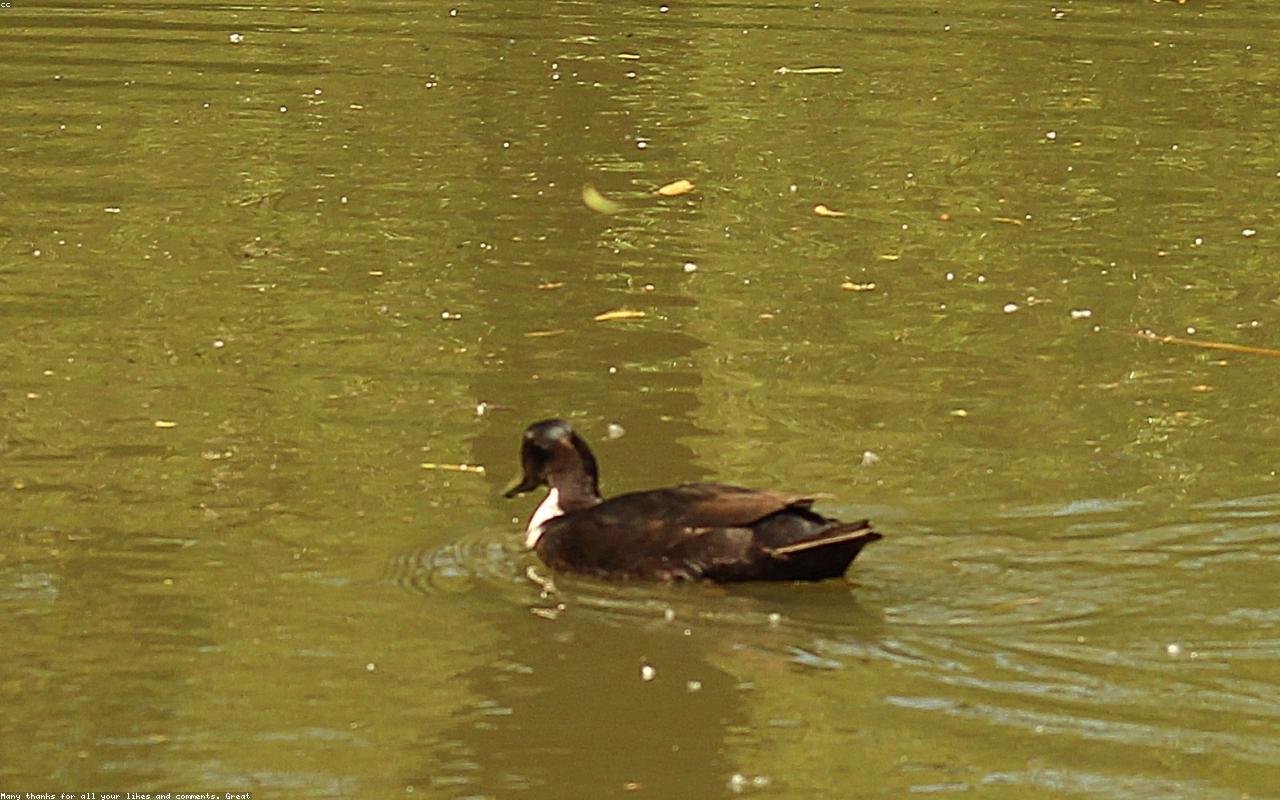
The mourning dove (Zenaida macroura) is among the most numerous land birds in the United States. Roughly 300 million are estimated to breed across the continent each year. It is hunted in 41 states. Roughly 14 million are taken annually. The species is not, by any conservation status, in trouble.
And yet.
The North American Breeding Bird Survey trend for the mourning dove over the past three decades is unambiguously downward across most of the eastern half of its range. The decline is steepest in the Midwest agricultural belt. Iowa: down 31 percent since 1990. Ohio: down 36. Indiana: down 27. Illinois: down 22.
The numbers come from the most rigorously collected bird-population dataset in North America. They are not subject to serious dispute. What is subject to dispute is the cause.
There are several candidates, each with its own evidence and its own constituency.
Hunting pressure is the candidate most easily measured. The federal Mourning Dove Population Status report, issued annually by the US Fish and Wildlife Service, models harvest against population estimates and concludes that current take is well within sustainable limits. The hunting groups cite this report. So do most academic biologists. Hunting, on the available evidence, is not the principal driver of decline.
Agricultural intensification is the candidate most epidemiologically plausible. Mourning doves nest on the edges of farmland, drink at small stock ponds, and feed on waste grain and weed seed. The shift over the past three decades to clean-tillage practices, glyphosate-based weed management, and consolidated field geometries has reduced the weed seed bank that historically fed adults and grown chicks through the late summer. There is good correlative evidence from agricultural ecology, and Cornell's State of the Birds 2025 report singled out grassland and farmland birds as the most threatened guild in North America.
Pesticide exposure is the candidate hardest to pin down. Neonicotinoid seed treatments are now standard on most US corn and soy acreage. Mourning doves consume treated seeds directly as part of their post-harvest diet. A 2024 paper from the University of Saskatchewan found measurable neonicotinoid metabolites in liver tissue of 78 percent of sampled doves from agricultural Saskatchewan, and demonstrated reduced flight endurance in laboratory-dosed birds at field-realistic concentrations.
Predation by free-ranging cats is the candidate easiest to ignore. The American Bird Conservancy estimates that domestic and feral cats kill roughly 2.4 billion birds in the United States annually. Mourning doves, ground-feeding and abundant, are disproportionately represented in cat kills around suburban and exurban habitat.
These causes are not mutually exclusive. They probably interact.
What the BBS route data show, when read carefully, is a slow attrition rather than a crash. The mourning dove is not disappearing. It is becoming less common at a rate of roughly one percent per year across much of its eastern range. A one percent annual decline does not register on the casual listener. It registers on a fifty-eight-year dataset.
Roost's citizen science section has been running a small project for the past two years inviting BBS observers to share their route notebooks for archival. We have so far received scans from 47 observers across 12 states. Three observers have been running the same route since the 1970s. Two have been running their routes since the 1980s.
The personal continuity is what makes the dataset what it is. The same observer hears the same route in roughly the same way for forty years. Inter-observer variability is the main source of error in BBS data, and inter-year variability within a single observer is much smaller.
Margaret Rooks, who has run BBS route OH-031 since 1988, drove the route with this writer on June 8, 2026, starting at 4:58 a.m. We counted 41 mourning doves at the 50 stops along the route. We counted 7 northern bobwhite, 14 field sparrow, 32 indigo bunting, and 286 European starling.
Margaret keeps her route notebooks in a metal filing cabinet in a spare bedroom of her house in West Union. There are 38 of them. The 1988 notebook records 94 mourning doves. The 1995 notebook records 119. The 2008 notebook records 81. The 2019 notebook records 53.
She knows the trend better than anyone with a PhD. She has driven the trend. The bobwhite, she said over coffee after the route, used to be on every fenceline. The hooded warbler, which the BBS does not target, used to nest in the ravine behind her property. The dove, she said, is the bird she misses most because there were so many of them.
There is an instructive irony in losing a common bird. The rare birds get the attention because they are rare. The common birds get the attention because they are everywhere. A bird that goes from very common to common to uncommon attracts attention only at the last transition, by which time the decline has been running for forty years.
The mourning dove is not at the last transition. It is in the middle of the slow phase. The Breeding Bird Survey will record what happens next, observer by observer, route by route, every June.
Margaret Rooks will run OH-031 again in June 2027. She is 71 years old. She has told her grandson, who lives in Cincinnati and is mildly interested, that he can have the route when she stops driving. He has not yet committed.