On a ridge above the Greenbrier River, in Greenbrier County, West Virginia, this writer's grandfather counted Eastern whip-poor-wills by ear from the screened porch of a small clapboard house each summer evening between roughly 1958 and 1992. The count was logged, in pencil, in the back of a 1957 Farmer's Almanac. The maximum recorded was 17 calling males in June 1971. The 2026 count, from the same porch, was zero.
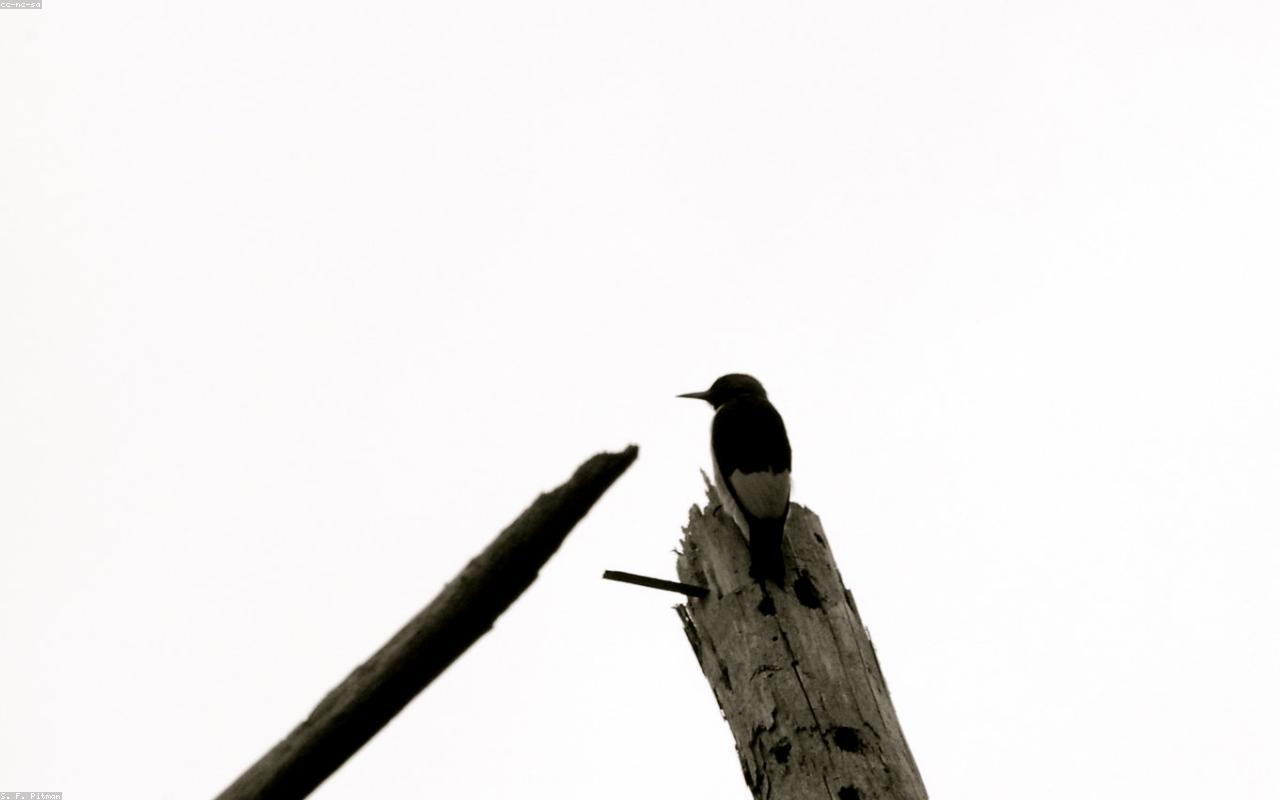
The Eastern whip-poor-will (Antrostomus vociferus) is a medium-sized nightjar that hunts moths and other large flying insects in the half-hour windows after sunset and before sunrise. It calls its name on summer nights. It lays its eggs directly on the leaf litter of open broadleaf forest. It is functionally invisible during the day.
It is also vanishing.
Partners in Flight, the multi-agency bird conservation partnership, estimates the species has lost roughly 69 percent of its global population since 1970. The decline has been steepest in the southern Appalachians, where the bird was once nearly ubiquitous in oak-hickory forest, and in southern Ontario, where Breeding Bird Atlas data show wholesale range contraction between the 1980s and 2020s.
The causes overlap with the mourning dove story told elsewhere in this issue, but they are not identical.
The whip-poor-will is an aerial insectivore. It eats large moths almost exclusively. The collapse of large moth populations across temperate North America — documented in long-running light-trap datasets from sites such as Hubbard Brook, the Hawaiian Volcanoes light trap, and the Lepidopterists' Society's regional surveys — has cut directly into the bird's food base. The moths have declined for reasons including light pollution (which disrupts moth navigation and reproduction), insecticide drift, and the loss of host plants in the agricultural matrix that fragments most eastern forests.
The whip-poor-will also requires a specific forest structure: open mid-canopy, sparse understory, and forest floor with leaf litter rather than dense shrub. In much of the eastern United States, decades of fire suppression have produced a thicker understory layer than the bird tolerates. Browsing by overabundant white-tailed deer has, paradoxically, opened some forests in ways that may help — but the overall trend is unfavorable.
A third pressure, less often discussed, is the bird's reliance on lunar light. Whip-poor-wills hunt more actively on moonlit nights, when their visual detection of moths is enhanced. Their breeding cycle is approximately timed to the lunar cycle, with peak nestling provisioning falling near full moon. Artificial sky brightness has measurably reduced the contrast that allows them to detect moths even in moonlight, and there is preliminary research from a group at the University of Massachusetts suggesting that the lunar synchrony of breeding has begun to slip in light-polluted areas.
What the data describe, the porch confirms.
Roost's citizen science section, in 2025, partnered with the Nightjar Survey Network at the College of William and Mary to recruit thirty observers to run lunar-timed nightjar surveys across central Appalachia. Each observer drives a fixed ten-stop route in the half-hour after evening twilight, stopping for six minutes at each stop, listening, and recording every calling whip-poor-will, chuck-will's-widow, and Eastern nighthawk.
The 2026 survey is mid-flight as this issue goes to press. Preliminary results from twenty-two completed routes show whip-poor-will detections down sharply from the routes' historical baselines, where baselines exist. On nine of the twenty-two routes, the 2026 count was zero. On three of those nine, the route had previously detected at least one calling male every year since the route was established.
Acoustic monitoring units — small recorders deployed for several nights at a stretch — are starting to fill in the picture more rigorously than traditional surveys can. The Cornell Lab's Yang Center for Conservation Bioacoustics deployed roughly 200 such units across the Cumberland Plateau and central Appalachian region during the 2025 breeding season. The first results, presented at the 2026 AOS conference in early May, suggested that whip-poor-will occupancy in the surveyed area was approximately 14 percent of suitable forest blocks, down from a model-projected 38 percent for the same blocks in 2001.
The numbers, while preliminary, are consistent with what the porch counters and the BBS observers have been documenting for years.
On the night of June 4, 2026, this writer sat on the screened porch above the Greenbrier River from 8:36 p.m., when civil twilight ended, until 10:14 p.m., when a light rain began. The moon was waxing gibbous, three nights before full. The night was warm and humid. The wind was negligible.
There were katydids in the woodlot. There was a barred owl at perhaps 9:12 p.m., calling once from the direction of the river. There was, at 9:38 p.m., a faint and ambiguous sound that might have been a distant whip-poor-will and might have been a tree frog. The recording is inconclusive.
The 1957 Farmer's Almanac sits on the kitchen table inside, opened to the back pages where the counts are written. The pencil is faded. The handwriting becomes less steady in the 1980s entries. The last entry in the Almanac is dated July 18, 1992, and reads, in part: "6 birds calling, two from across the river. Rain at 10."
A bird that calls its name nightly for a hundred and fifty years and then stops calling is the simplest possible kind of measurement. It does not require equipment. It requires a porch and someone willing to sit on it.
What the data and the porch both suggest is that the silence is not local. It is regional. It is, in some places, complete.
What is to be done about it is the harder question. The moths must come back, the forests must be managed for structure, the sky must be allowed to get darker again. None of these are quick. The whip-poor-will, which lives perhaps four or five years in the wild, does not have decades to wait.