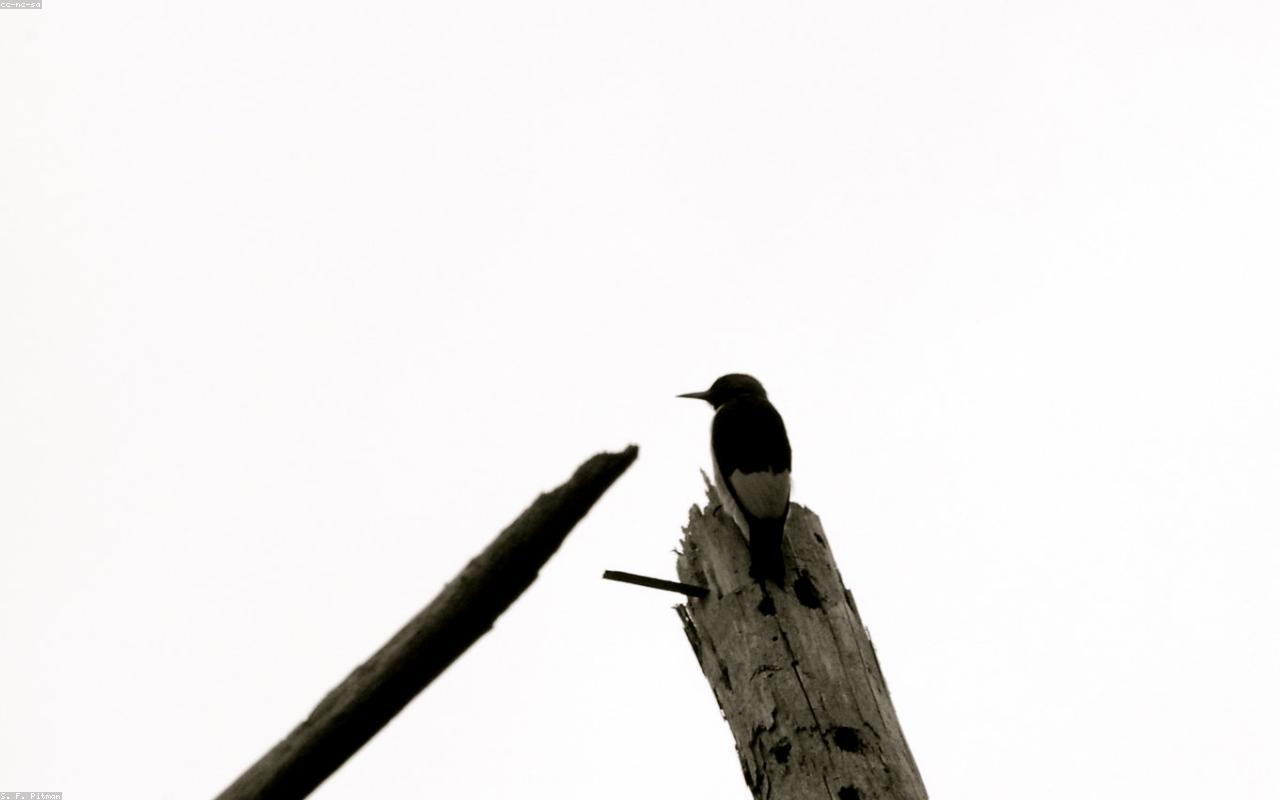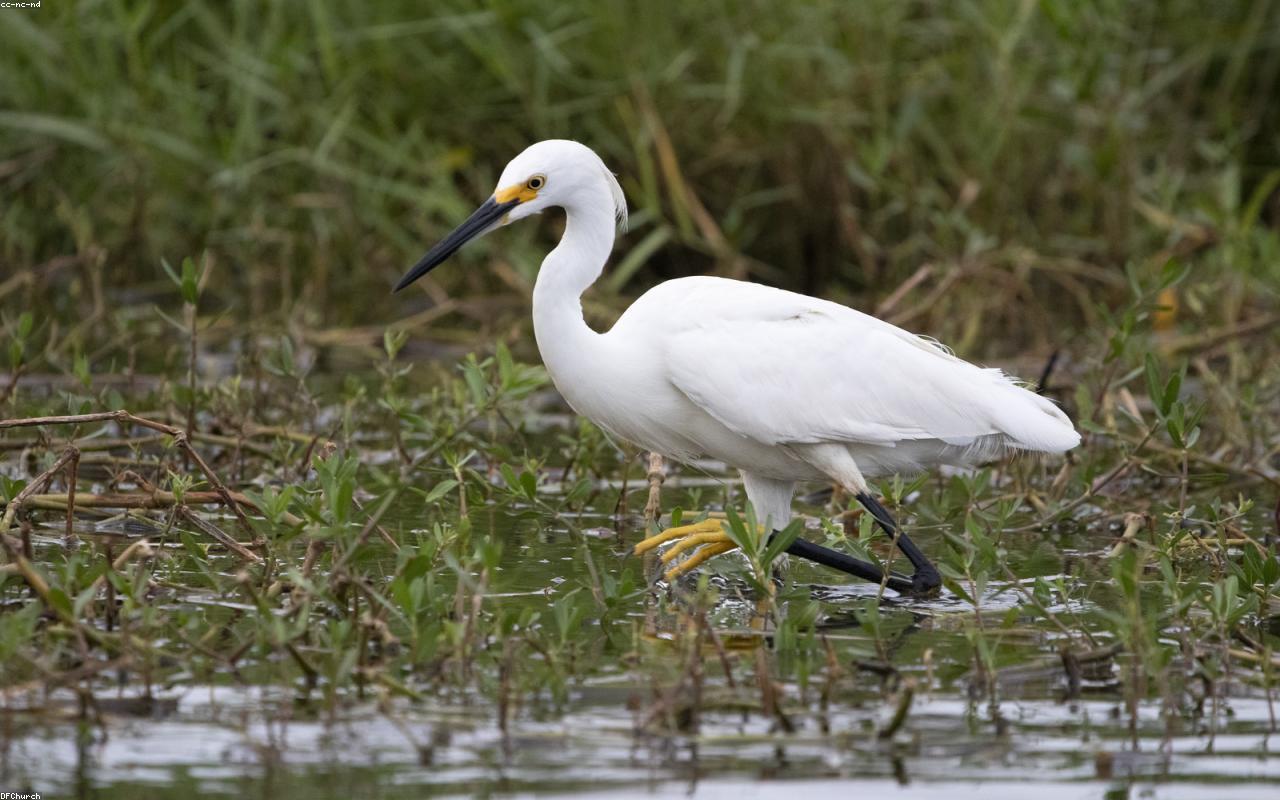
The egret stands in six inches of brackish water at Stone Harbor, New Jersey, indifferent to the joggers on the boardwalk twenty metres behind it. Its yellow feet flicker in the shallows, a quick agitation meant to startle silversides into the open. The morning is grey and the bird is whiter than the sky.
A hundred and twenty years ago, that posture would have killed it.
Between roughly 1880 and 1910, the snowy egret (Egretta thula) was nearly annihilated for its aigrettes — the long, lacy plumes the bird grows during the breeding season. Milliners in London, Paris, and New York used them to decorate women's hats. At the trade's peak, an ounce of plume reportedly fetched more than an ounce of gold.
The egret could only be taken in breeding plumage, which meant taking it in the colony, which meant orphaning the nestlings. Plume hunters in Florida's Ten Thousand Islands and along the Texas coast wiped out rookeries one by one.
By 1900 the bird was scarce enough that ornithologists began publishing eulogies. Frank Chapman, then assistant curator of birds at the American Museum of Natural History, walked Fifth Avenue in 1886 and counted 542 women's hats, 174 of which bore feathers from forty native species. He published the list.
The recovery is now a textbook case for two reasons: it happened, and the mechanisms by which it happened are unusually well documented.
The Lacey Act of 1900 prohibited interstate trade in birds taken in violation of state laws. The Weeks-McLean Migratory Bird Act of 1913 went further. The Migratory Bird Treaty Act of 1918, signed with Canada and later extended to Mexico, Japan, and Russia, closed the legal market on what had become commercial slaughter.
Audubon Society wardens, hired and armed, began guarding rookeries directly. Guy Bradley, a warden at Cuthbert Lake in the Everglades, was shot dead by a plume hunter in 1905. Columbus McLeod, another warden, disappeared in 1908 near Charlotte Harbor; his weighted body was recovered later. The roll of conservation martyrs in the United States starts with these two men and the bird they were protecting.
By the 1930s, snowy egret numbers were climbing again. By the 1960s, the species had recolonized salt marsh from Maine to the Yucatán. By the 1990s, breeding populations had pushed inland along the Mississippi drainage and were nesting at the Salton Sea, in northern California, and as far north as southern Oregon.
But recovery is not the end of a species's story. It is one chapter in a longer accounting.
Pell Murphy, who edits the magazine's citizen science section, ran the New Jersey eBird data for the past fifteen years at Roost's request. Snowy egret detections in the state's coastal counties have been roughly stable, with a faint downward trend in May counts at three of the five long-monitored rookeries.
The cause is not plume hunting. The causes are quieter and harder to legislate against.
Salt marsh die-off, attributed in some studies to a combination of sea-level rise and Sesarma crab overgrazing, has reduced nesting habitat in southern New England and on the Delaware Bay. Mercury and PCB loads in estuarine fish remain elevated in places where the egret hunts. The lit-up coastline interferes with the timing of dispersal flights from rookery to feeding ground.
Dr. Jenna Aliyev, who has studied the Stone Harbor rookery for nine seasons from a small field office at the Wetlands Institute, framed it this way over coffee in Cape May Court House in March. The bird was saved from collapse but is now navigating a slow set of pressures it cannot recognize as pressures. There is no warden who can shoot a methylmercury molecule.
Aliyev's team monitors a colony of about 380 pairs of mixed wading birds — snowy egret, great egret, little blue heron, glossy ibis, black-crowned night heron — on a small dredge-spoil island in the back bays north of Stone Harbor. The island is named, on no chart, after the dredge that built it.
The colony's productivity in 2025 was 1.7 fledglings per snowy egret nest, slightly below the long-term average of 1.9. The 2026 season is mid-flight as this issue goes to press. The first chicks hatched on or about April 28.
There is a particular pleasure in watching a snowy egret hunt that does not need defending. The bird's stillness, broken by a single yellow-footed shuffle, then the strike. The strike is faster than the eye records. The fish is gone before the splash settles.
Frank Chapman would have recognized the bird on the dredge island. He would not have recognized the dredge island. He would not have recognized the back bays as back bays, given the housing and the bulkheading. He would, with his ornithologist's patience, have recorded what was there and what was not.
That is the work the species is asking of us now. Not rescue. Accounting.
The egret on the boardwalk at Stone Harbor lifted into the air at 9:14 a.m. and flew east, low over the marsh, toward the rookery island the joggers cannot see from the boardwalk. Its plumes, in good light, were as fine as any in any hat in any closet in any apartment on any of the streets Chapman walked.
They are still on the bird. That is what was won.